Japanese election polls, 2025
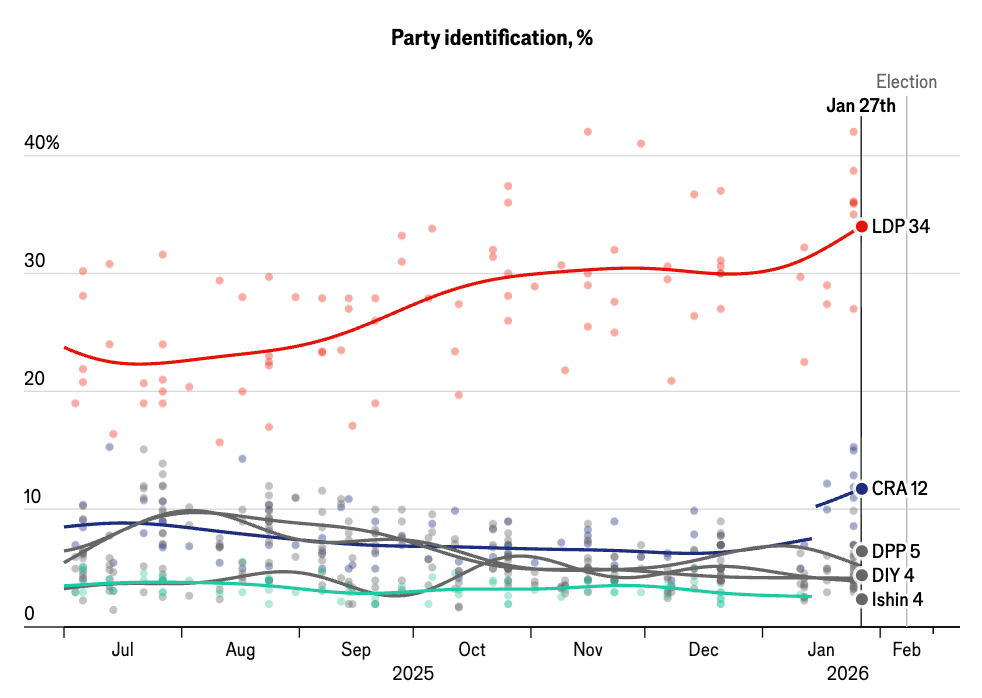
For the snap Japanese election, I produced a simple polling average for the final weeks of the campaign.
Modelling Britain’s electoral system
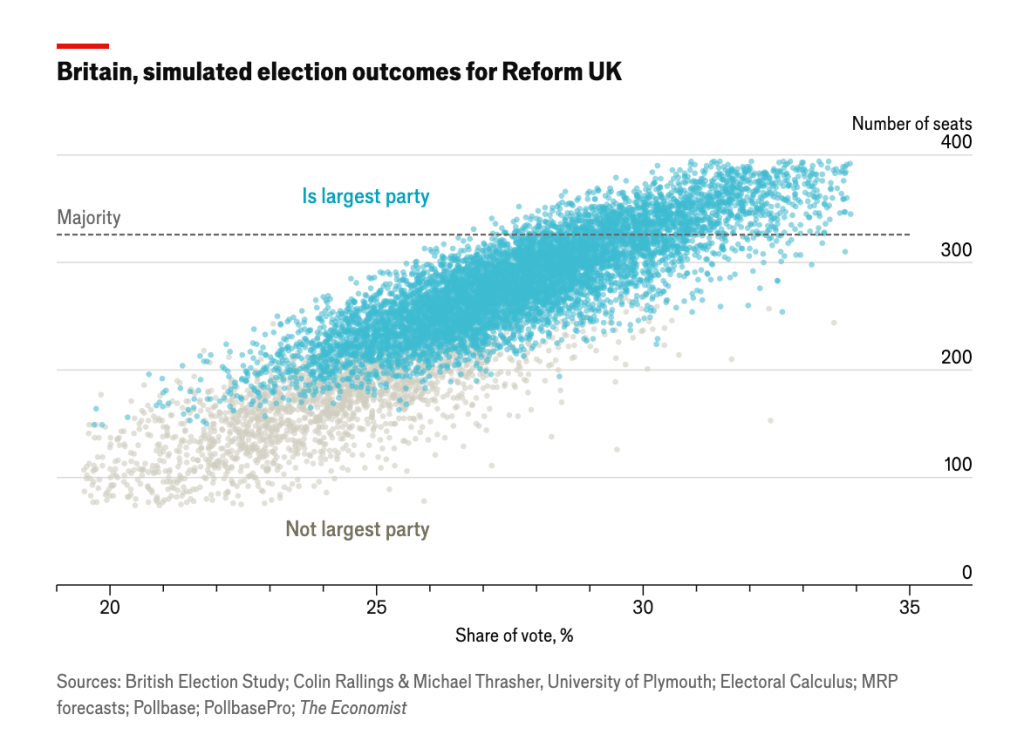
I built a model of British elections with Monte Carlo sampling. Nationwide vote share is sampled from likely polling errors, regional estimates are taking from uniform swing plus regional polls, constituency results are a combination of regression based on historic results and an average of MRPs. Featured on the cover of The Economist issue December 6th 2025.
State-level projections of Donald Trump’s approval rating

Using a method similar to MRP, I modelled and poststratified Donald Trump’s approval rating, using The Economist’s data with YouGov. The model includes 1,500 respondents each week from YouGov and will update weekly for the remainder of Donald Trump’s second term in office.
South Korea poll tracker, 2025
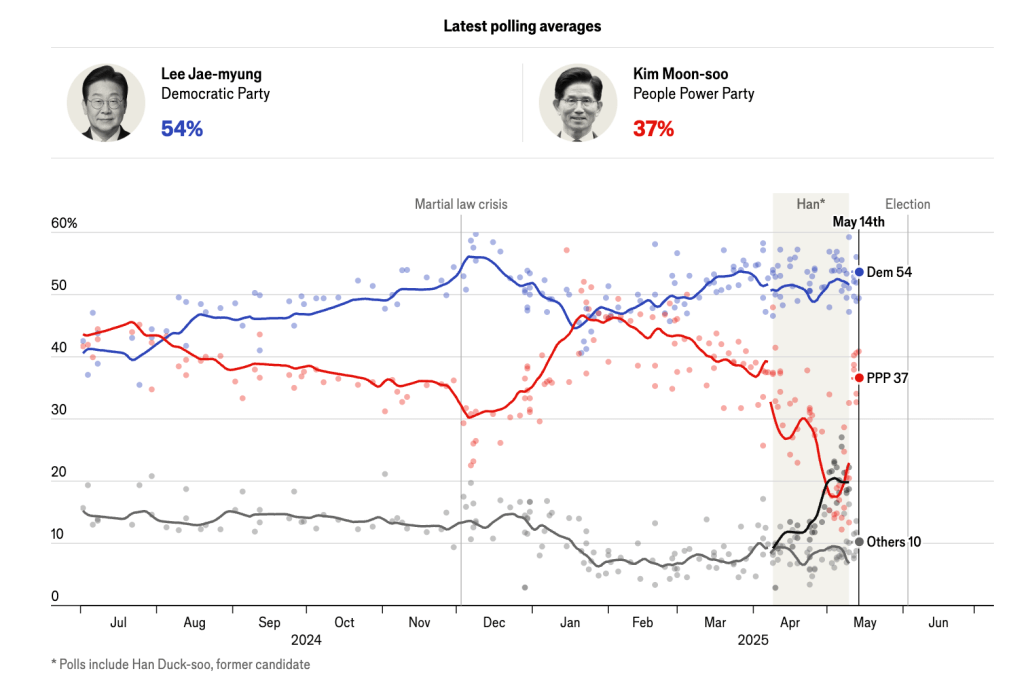
Using similar methods as our US, German and Canadian poll trackers, I produced a tracker of the South Korean presidential election. This is an adapted version of the methodology advanced by Jack Bailey and Luke Mansillo, which was originated by Simon Jackman.
Canadian election forecast, 2025
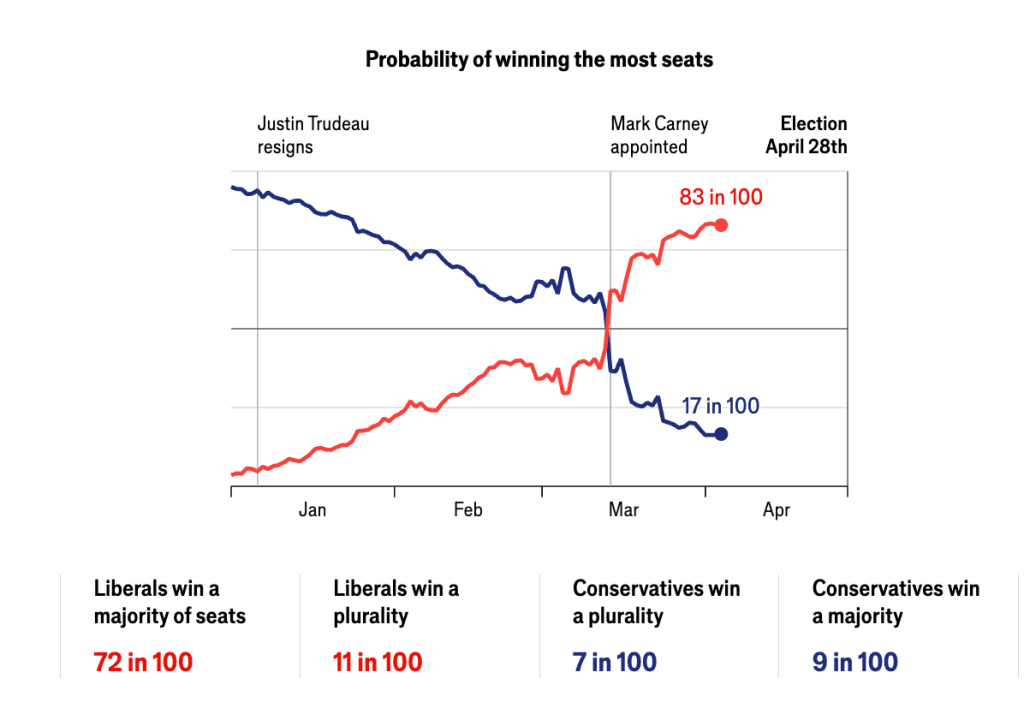
I produced a forecast of Canada’s federal election. The forecast works using uniform swing based on national and provincial polling. Its structure is hierarchical, with ridings nested in provinces nested in the country as a whole. 10,001 simulations are drawn from correlated distributions within and across parties, ridings and provinces.
Canadian election poll tracker, 2025
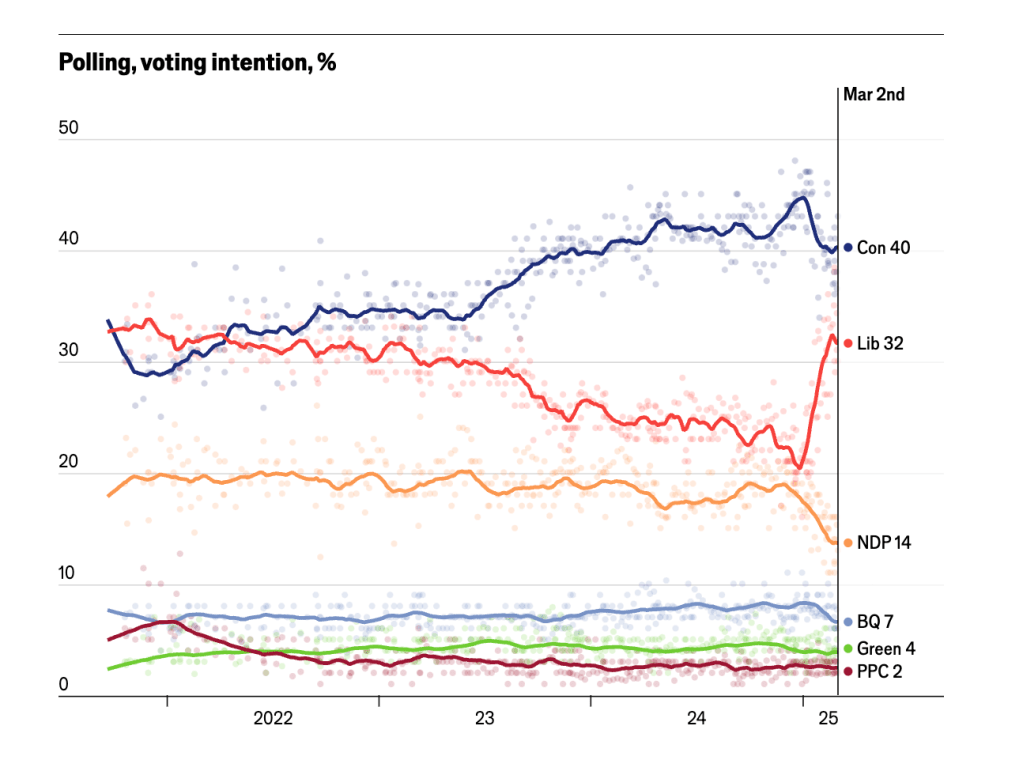
Using similar methods as our US and Germany poll trackers, I produced a tracker of the Canadian election. This is an adapted version of the methodology advanced by Jack Bailey and Luke Mansillo, which was originated by Simon Jackman.
German election forecast
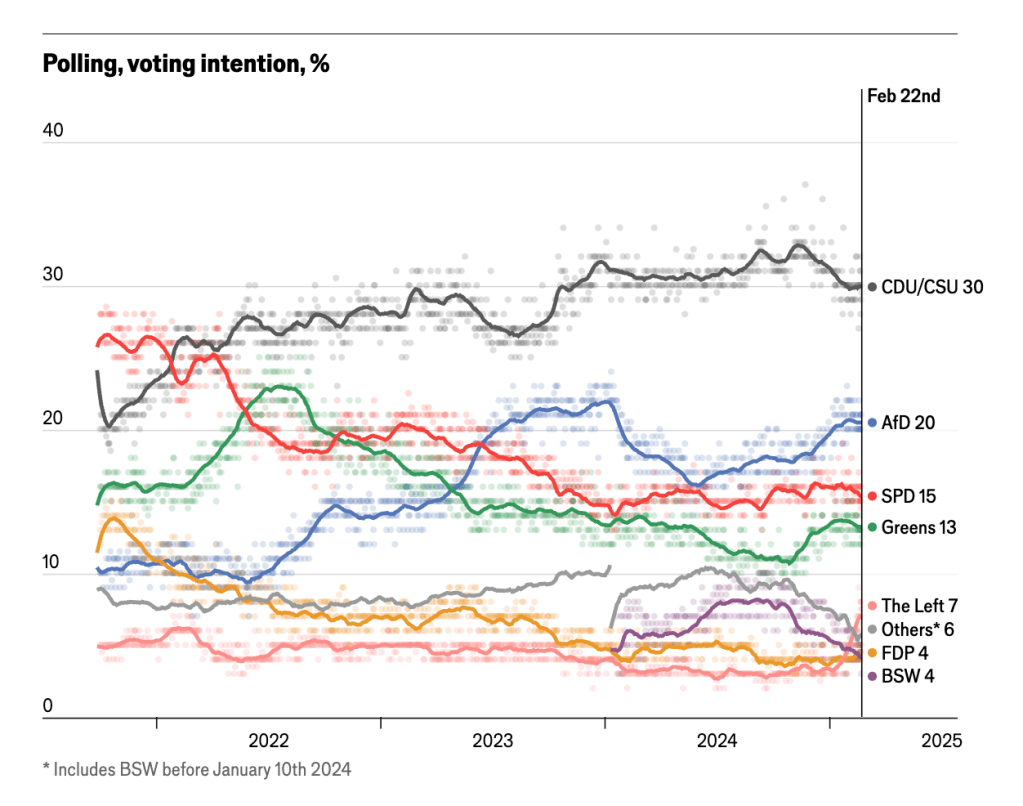
The Economist produced a polls-based forecast of the 2025 German election. I maintained and tweaked the model, largely built by Philipp Hauber and G Elliott Morris, in the run-up the election, which contributed to our reporting during the campaign.

The final results of the election all came within our forecasted intervals, thanks to a very accurate set of polling from German pollsters. The most likely scenario from our forecast simulations—a five party Bundestag where the SPD and CDU/CSU had a majority—was borne out.
Tracking Donald Trump’s presidency with YouGov
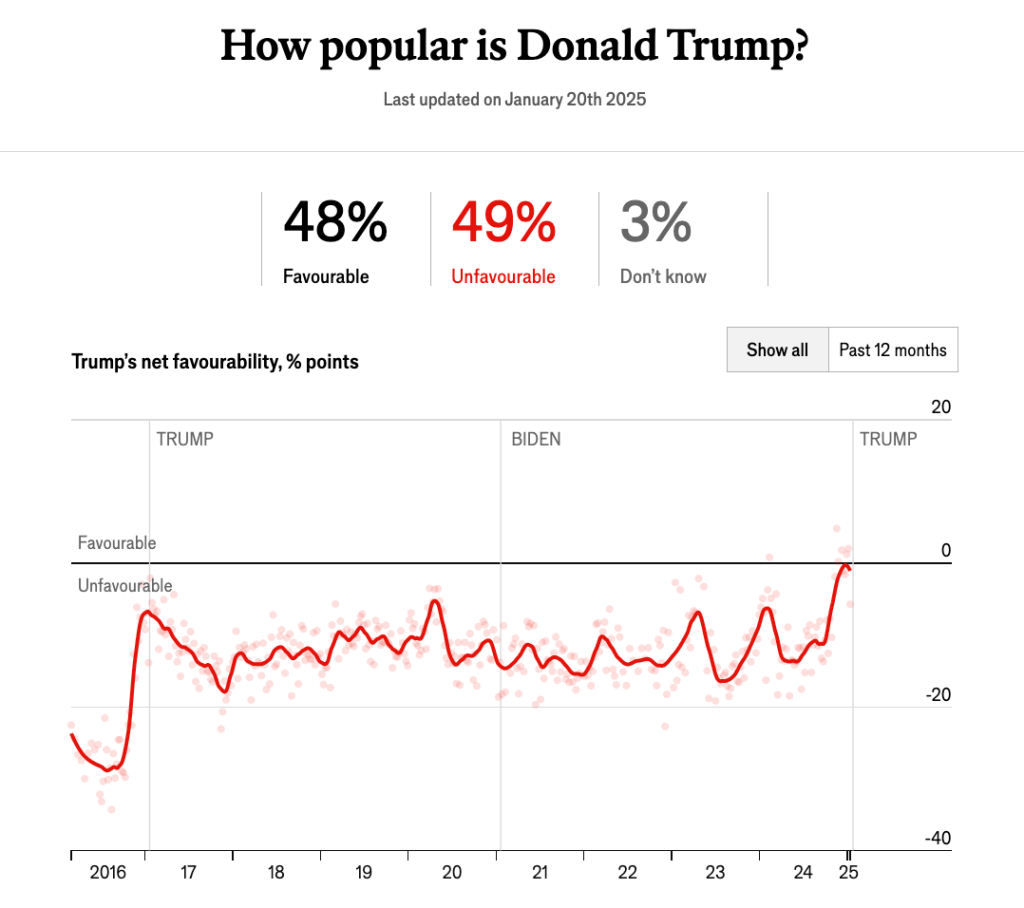
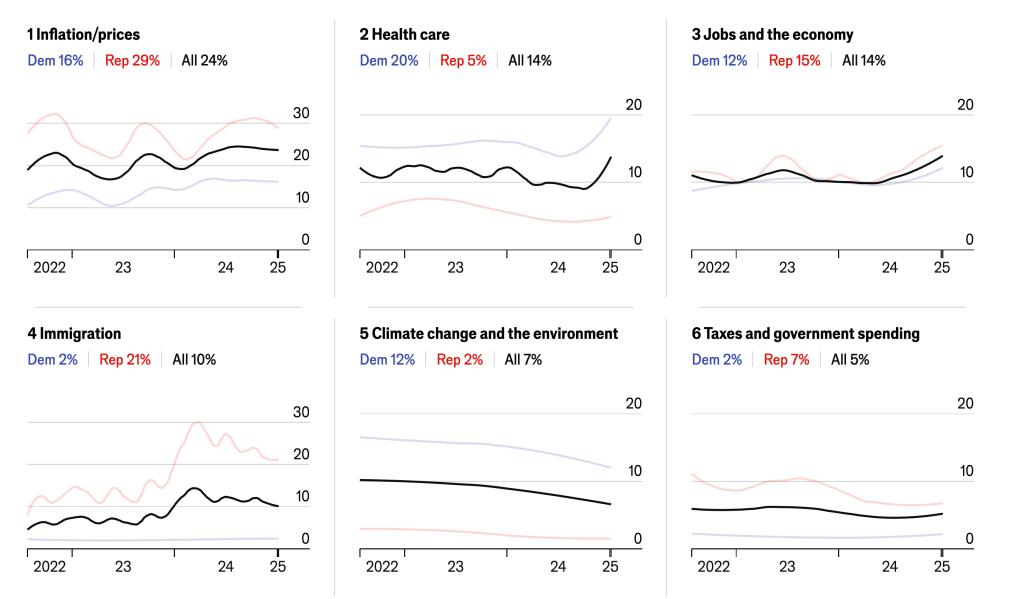
Using data from The Economist’s polling with YouGov, I developed trackers to follow public opinion during Donald Trump’s presidency. I used LOESS regression with cross-validation to find the optimal smooth parameters.
US Presidential Poll Tracker 2024
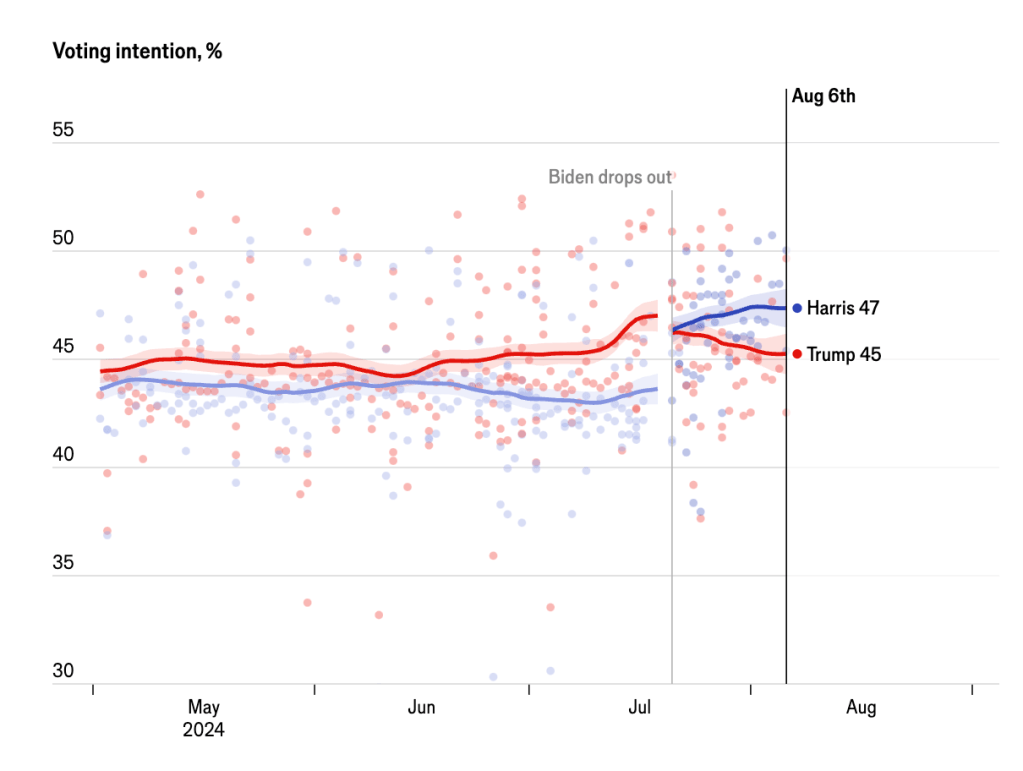
After President Biden’s withdrawal from the election, I produced a poll tracker to track the race between Donald Trump and Kamala Harris. I adapted the methodology used by Jack Bailey and Luke Mansillo, which was originated by Simon Jackman. Their approach treats each poll as an imperfect estimate of some “true” support for each candidate, which takes a random walk from election to election. A Bayesian MCMC model is used to estimate the “true” voting intention, given recent polls. The model takes into account differences in methodology between polls and the partisan tilt of individual polling firms’ output. This approach allowed me to include a discontinuity for Biden’s withdrawal, letting the estimated voting intention jump on 21st July 2024, while retaining useful info from Biden-Trump polling.
The Economist Live Forecast UK General Election 2024
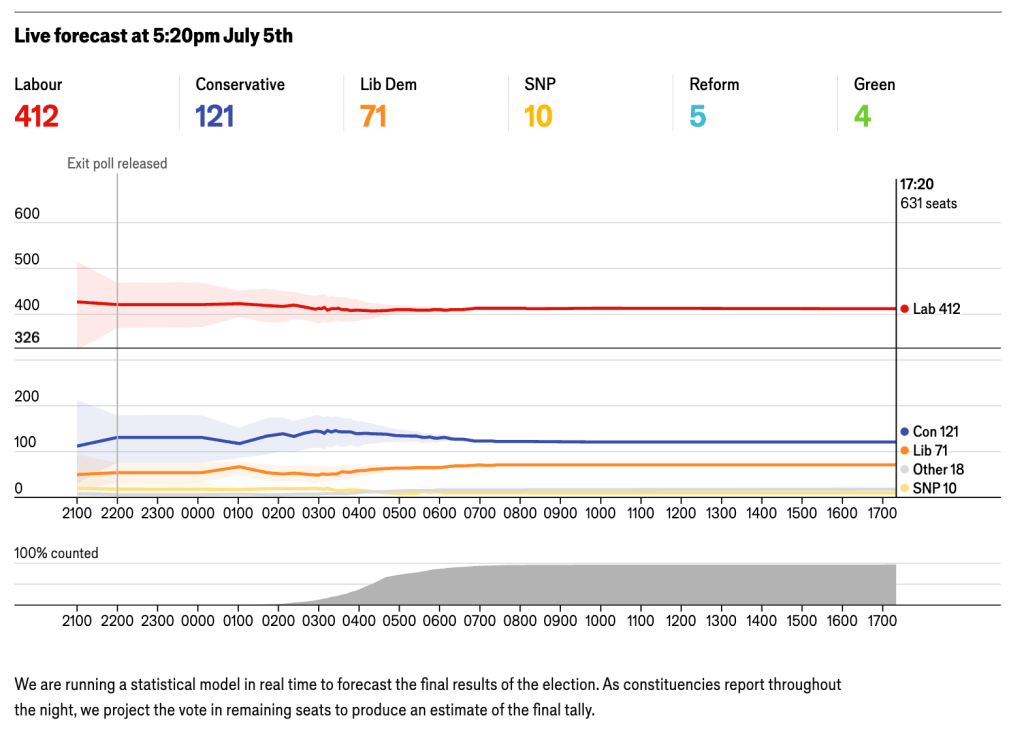
For the 2024 General Election, I produced a live forecast based on reported election results. The model started from our pre-election forecast, updated with the exit poll, then used Bayesian updating to produce new estimates as results were made available. It correctly forecasted that Labour would win around 412 seats from 3am and was closer to the final Conservative and Reform UK tally than BBC projections for much of the night.
The Economist/We Think MRP Poll – June 2024
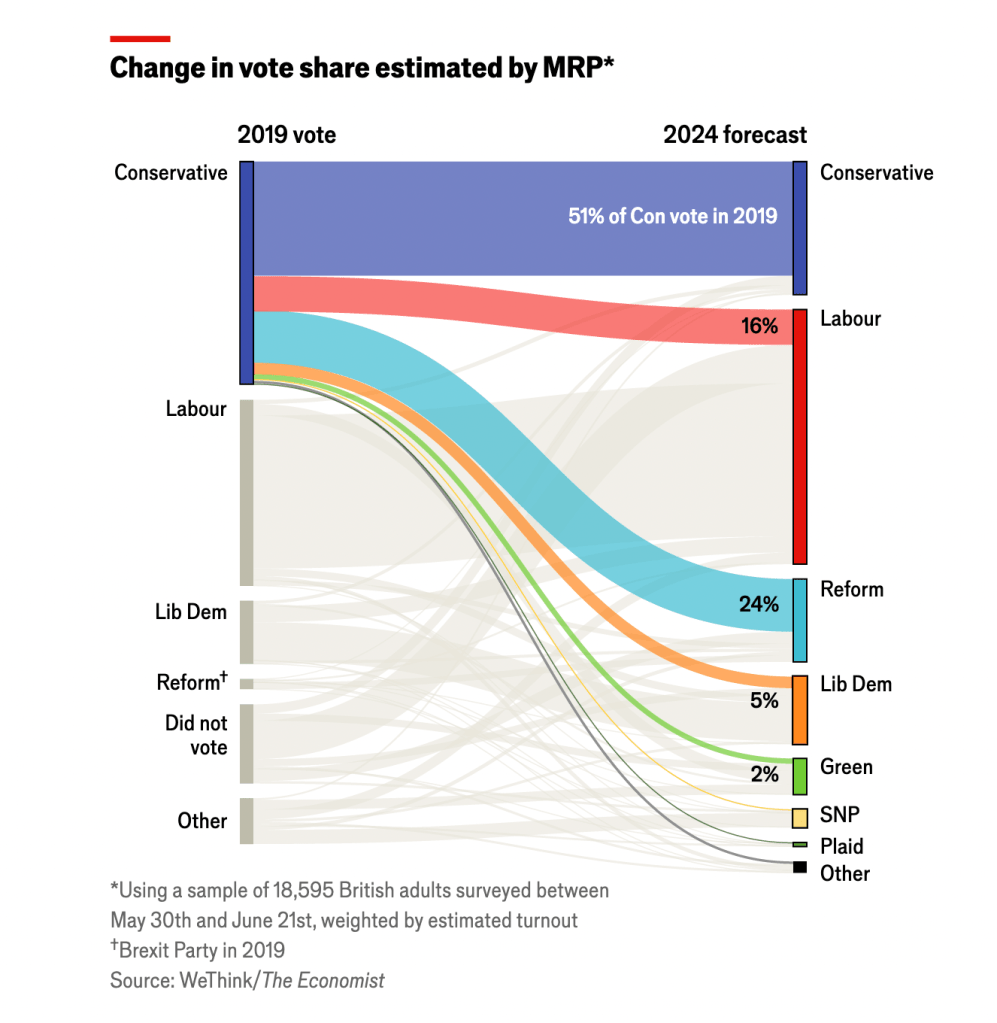
I produced The Economist’s MRP for the 2024 General Election, using data from WeThink. The model forecast a Labour majority of 280, with 465 Labour MPs, 76 Conservative, 53 Liberal Democrat, 29 SNP, 3 Reform, 3 Green and 3 Plaid Cymru. The analysis from the MRP fed into The Economist’s final predictions, which I wrote up here.
South Africa Poll Tracker – April 2024
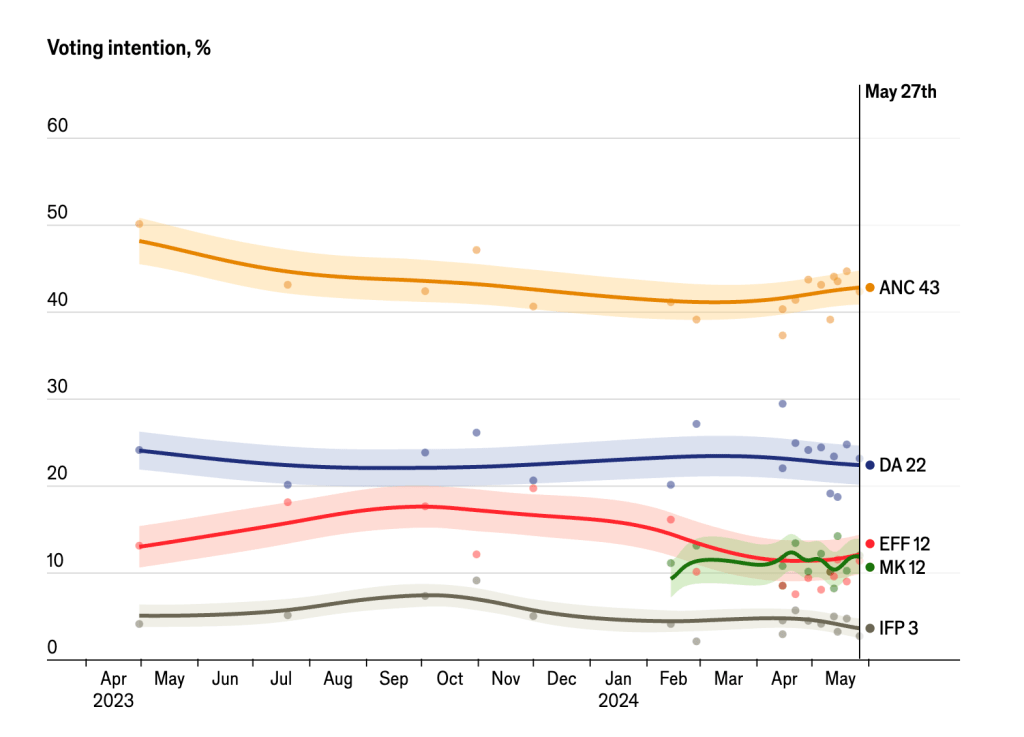
I produced data behind The Economist’s South Africa polling average. The tracker used an inverse variance-weighted average of a cross-validated Generalised Additive Model and a simple moving average with exponential smoothing.
MRP Polling of the 2024 US Presidential Election – November 2023
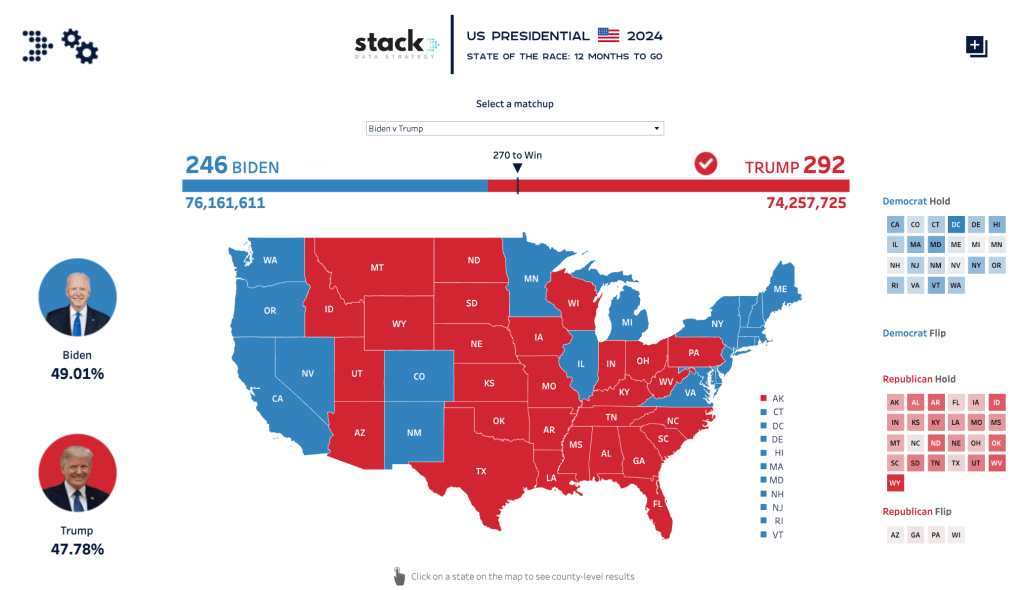
I was part of the team that produced Stack Data Strategy‘s public MRP model of the 2024 election race. My particular focus was on building the poststratification frame and designing the final models used to estimate vote choice. The model was covered in US publications (Business Insider, Forbes, Politico Playbook etc). I worked with John Burn-Murdoch at the Financial Times on his write-up.
Estimating the effect of “progressive alliances” in the 2022 Local Elections – June 2022
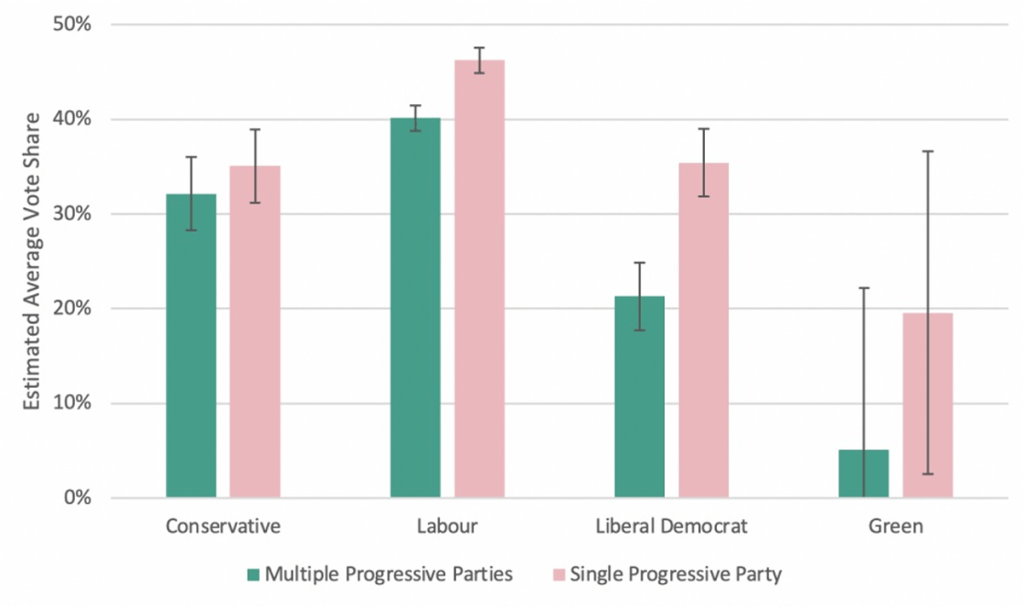
As part of a freelance project for campaign group Compass, I estimated the effect of progressive electoral cooperation in the 2022 Local Elections. I designed a causal inference research approach which compared similar wards where multiple centre-left parties stood a candidate (control) and those where only one centre-left party stood (treatment). I used coarsened exact matching to estimate the causal effect, finding that wards with a single ‘progressive’ candidate had a significantly higher vote share for that party. The benefits for that party were significantly higher than for the Conservative candidate in the ward, indicating that centre-left collaboration may have cost the Conservative Party tens or hundreds of councillors. This research was published on the LSE Politics and Policy blog (PDF).
Quantifying substantive representation of ethnic minorities – September 2022
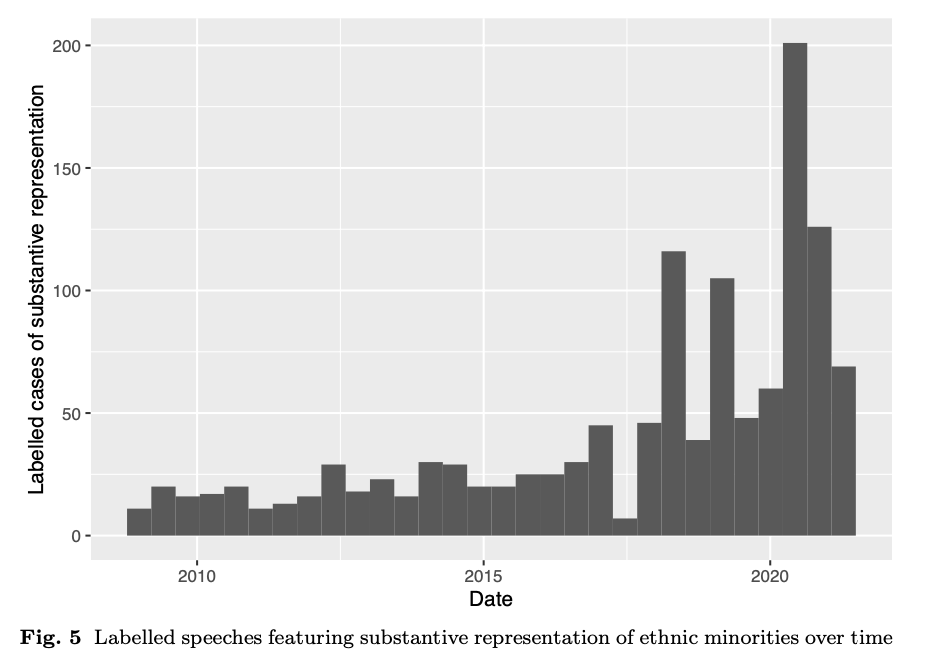
Under single-member district electoral systems, geography is paramount. This is particularly so for minority groups, for whom geographic concentration mediates the ability to secure representation. In Britain, some have argued that relative concentration of ethnic minorities has increased their ability to achieve descriptive representation. However, this concentration also dilutes the size of minority groups in most districts. My MRes Dissertation (PDF) shows how the presence or absence of ethnic minorities in a constituency is one of the most important factors affecting whether an MP will substantively represent ethnic minorities in Parliamentary speeches.
 Owen Winter