This was originally posted as an article for The Outward Bound: Bijlmer: Back to the City of the Future
Crouching over my new bike, despairingly trying to reattach the chain, I hear a shout in Dutch from the side of the road. I look up, confused. Surely it can’t be directed at me. Having only arrived in Amsterdam two days before, I am not used to being spoken to by strangers in the street. What could this man want? Clearly, my confusion betrayed my nationality, as the man on the pavement grinned, switching to English – ‘Can I help with your bike at all? Looks like your chain is loose!’
I thank him, embarrassed, and start dragging my bike away, reflecting that the people of Bijlmer, my neighbourhood in Amsterdam’s Zuid-Oost, seem to be much friendlier than the imposing buildings that surround us.
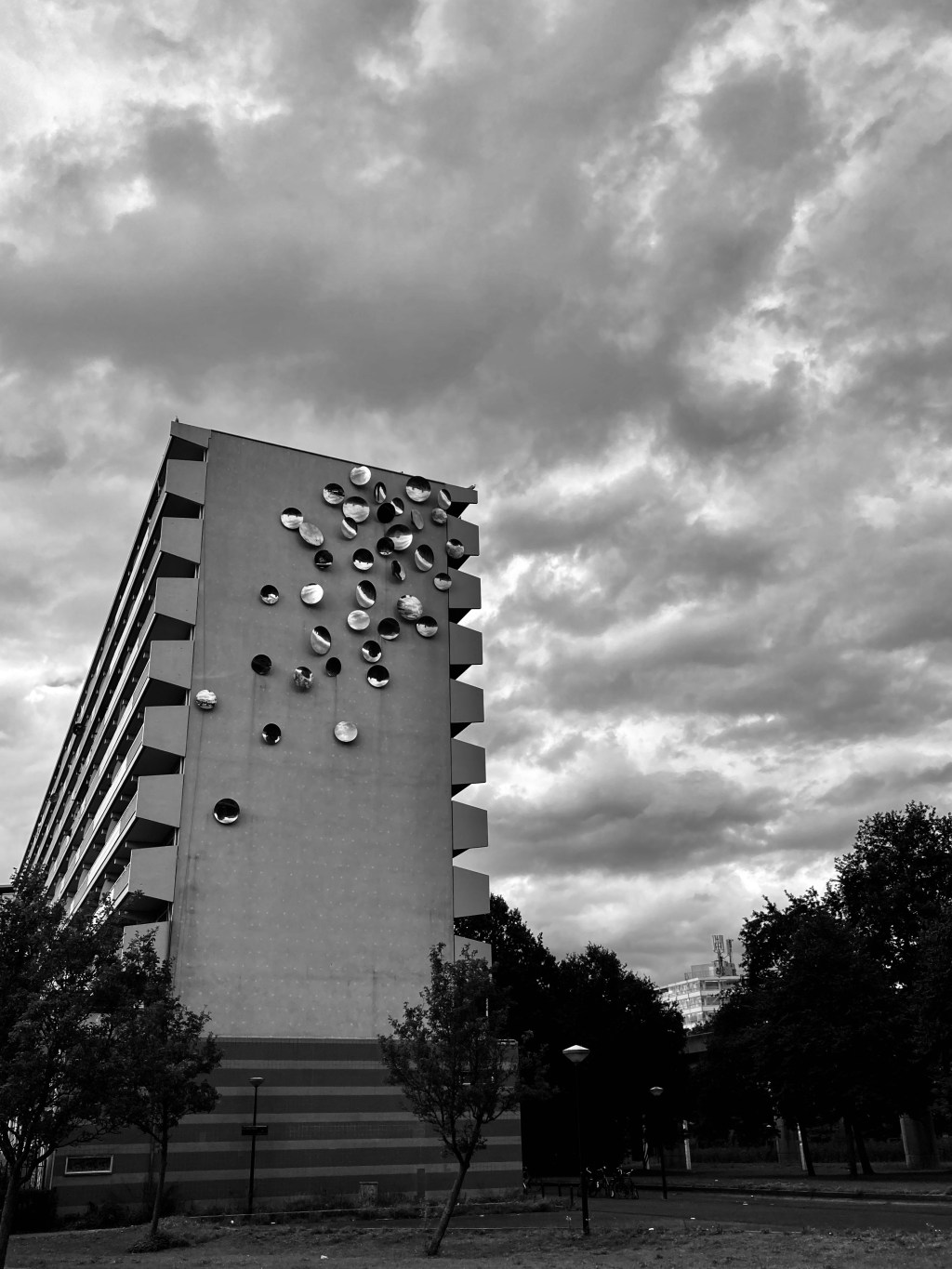
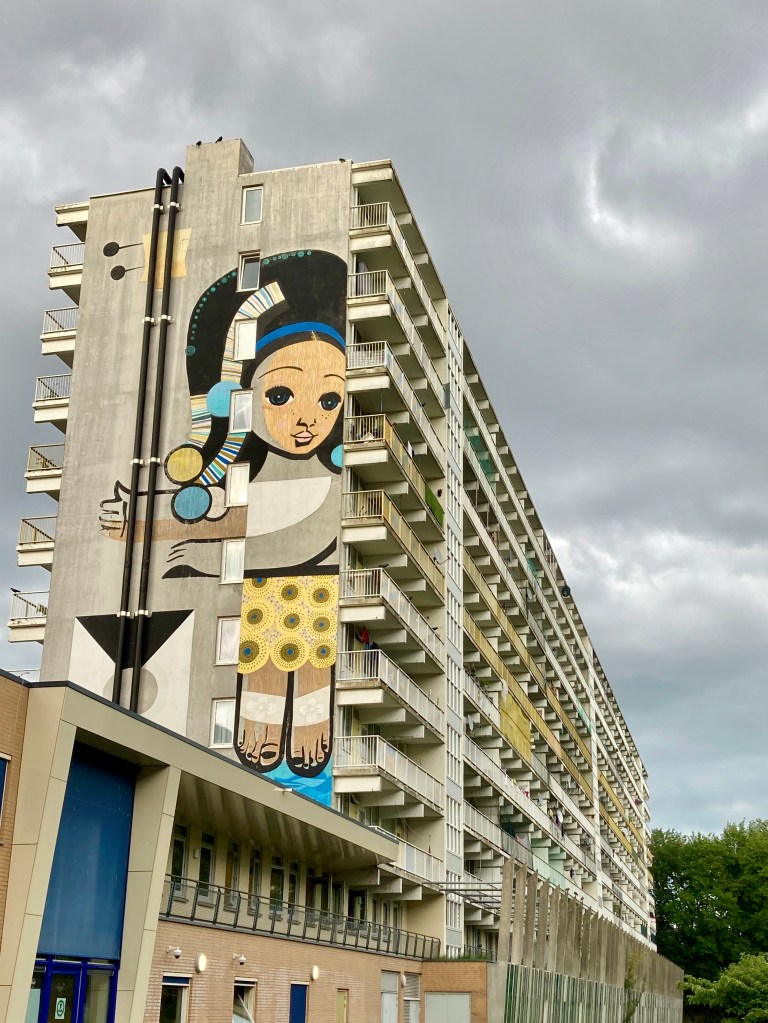
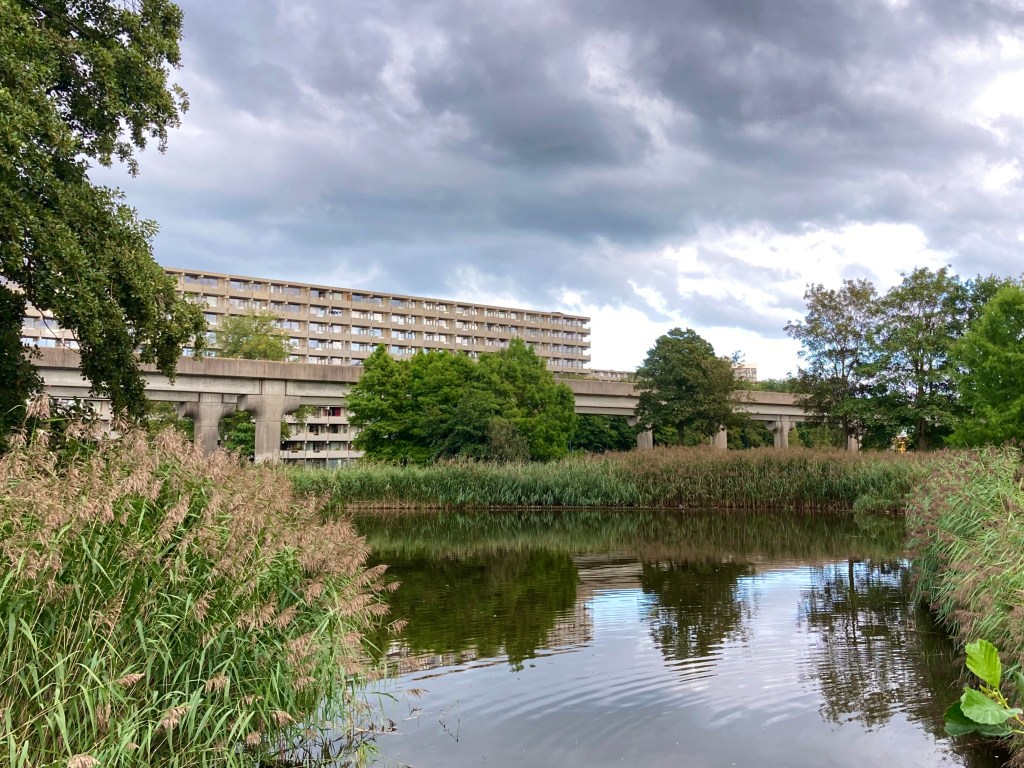
Before long, I find myself on the ground floor of one of these buildings. Built in the 1960s, Bijlmer was originally conceived by modernist architects as a ‘city of the future’, embracing the design principles of Le Corbusier. While elements of this design style exist in cities across the world, Bijlmer was intended to be the model modernist city, embracing concrete, elevated roads and high rises. The tower blocks are organised along hexagonal, ‘honeycomb’, grids – huge, impersonal, and reaching ten floors or more. Inside, the bike mechanic says he can fix my bike but unfortunately ‘I can’t replace your clothes’. We laugh at the bike oil covering my t-shirt and jeans and he offers me soap to wash my hands. I guess that is what you get for buying a rusty second hand bike for only €40.
The cramped bike repair shop is typical of the diverse independent businesses run out of the tower block’s ground floor. Further around the hexagon, a shop window advertises driving courses in Dutch, English, Farsi and Arabic, and a travel agent features a large ‘Surinam Airways’ logo which looks like it was designed in the 1980s. These small shops and businesses provide a streak of colour to the concrete structures. In the center of the hexagon is a wide grassy space spotted with trees, with a cycle path running through it.
This diversity, and particularly the connection with Suriname, is the story of Bijlmer, a neighbourhood which proudly claims to be home to over 150 nationalities. After construction, the modernist dream failed to live up to expectations and many of the blocks lay empty. Meanwhile, after Suriname’s independence in 1975, thousands of Surinamese used their Dutch citizenship to move to the Netherlands, where they struggled to find accommodation. Racist landlords and housing associations in many areas, including Bijlmer, enforced quotas for black tenants – despite Surinamese immigrants having full citizenship and flats being empty. Eventually, black activists took action and began to break into Bijlmer apartments, squatting until the Dutch government relented and offered them full tenancy agreements. These squatters were trailblazers who helped establish a vibrant black Dutch community in Bijlmer, to the chagrin of racist whites.
Sadly, racist perceptions of majority-black Bijlmer coupled with an opioid crisis meant the neighbourhood was increasingly alienated from Amsterdam and in disrepair. Through the 1980s, the area declined steadily. In 1992, further tragedy struck when a cargo plane crashed into a block of flats, killing at least 43 people. However, since the mid-1990s the area has experienced remarkable regeneration. Many of the largest tower blocks were demolished, to be replaced by smaller individual units, and the transport focus of the area was moved from cars to bikes, leading to the removal of elevated roads. To be clear, this gentrification was controversial, with many tenants going through lengthy legal battles to try and save their homes, but unlike many gentrification projects, the new residents of smaller units tended to be 2nd generation immigrants that formed Amsterdam’s black middle class, rather than whites. Indeed, many black residents who left Bijlmer in the 1980s returned, meaning the area retained a distinctive identity.
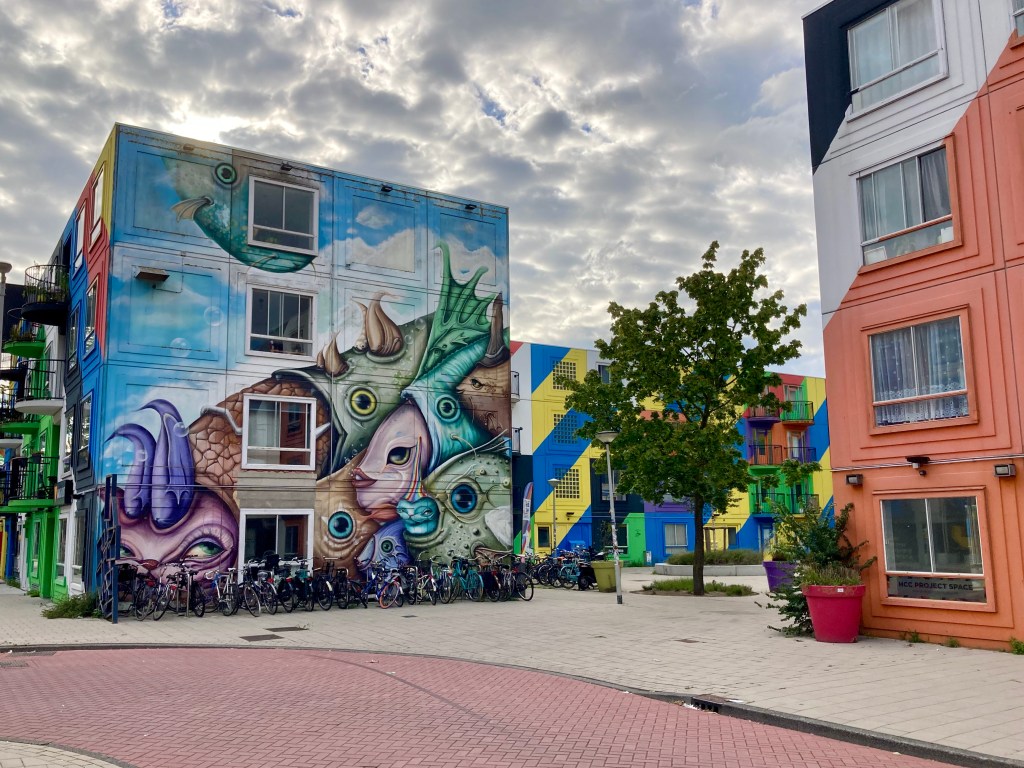
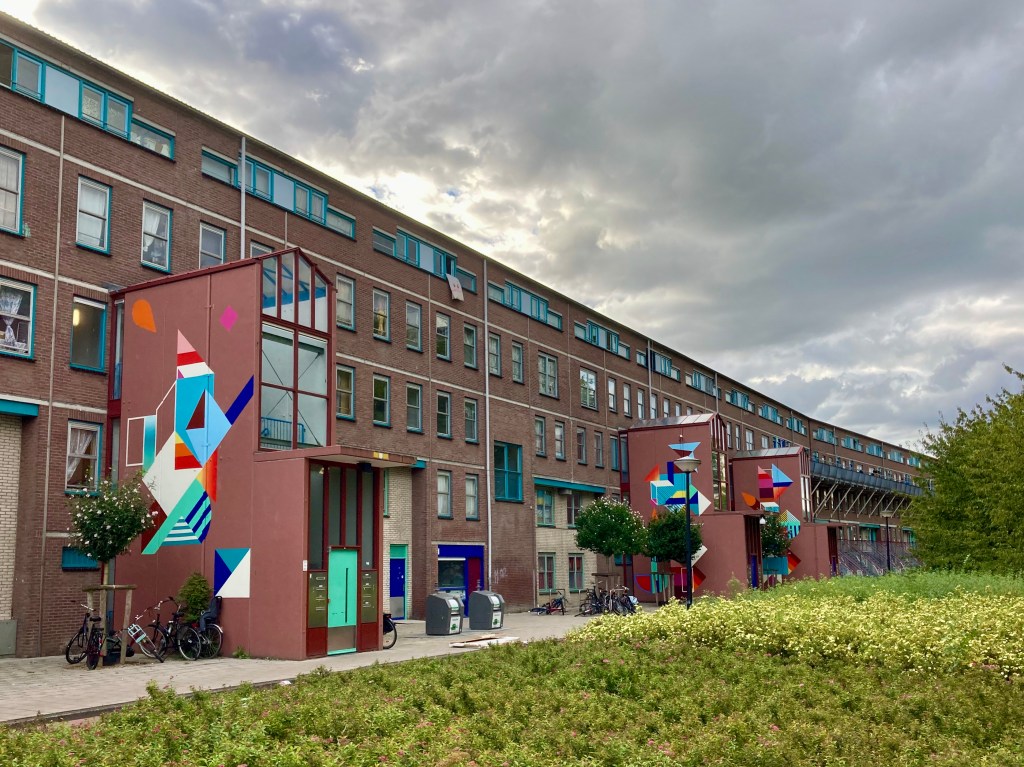
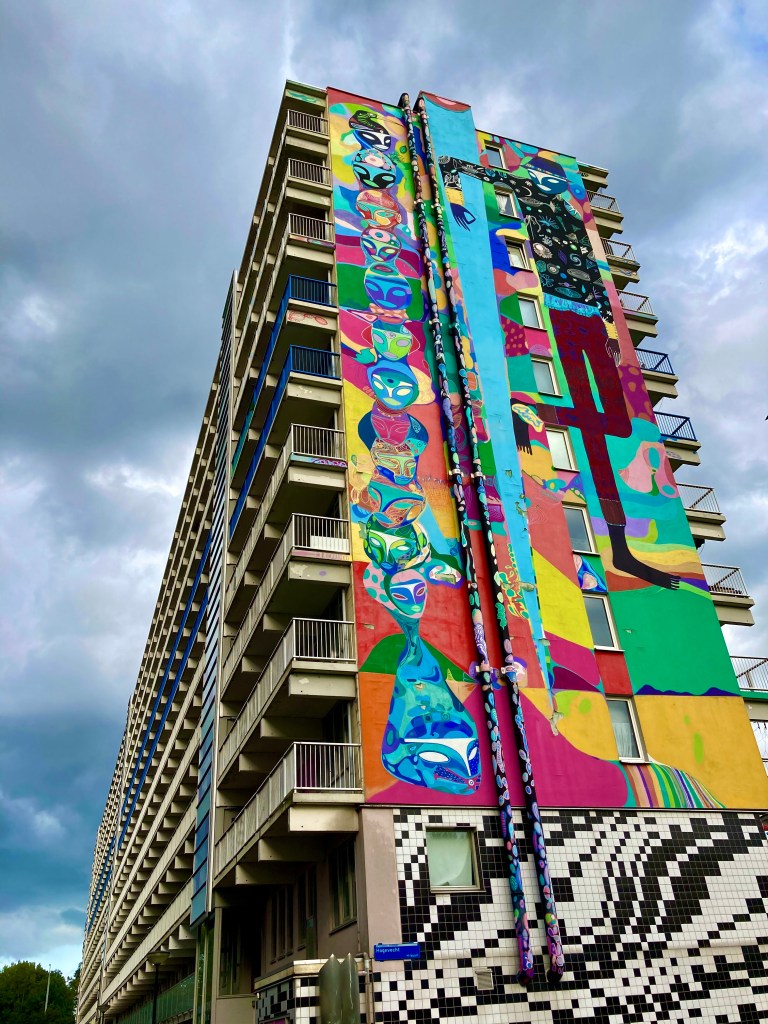
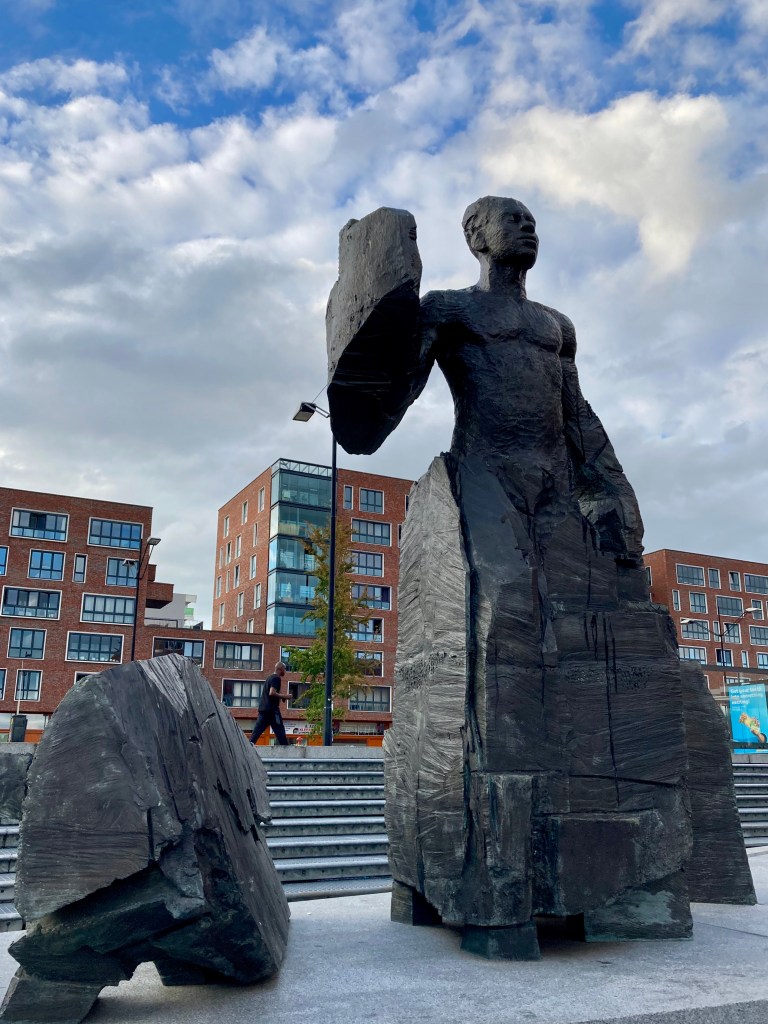
Walking back to my apartment to wait for my bike to be fixed, I can see why Bijlmer has become one of Amsterdam’s coolest neighbourhoods. The shift in focus from cars to bikes means wide open green spaces, flooded with sunlight, and the remaining tower blocks are divided by cycle paths and canals, softening their harsh exteriors. Here, the importance of public space is obvious. Statues and art installations are everywhere, and murals scale the buildings. Markets sell fresh produce and goods from around the world. The people of Bijlmer, in a very physical way, have reclaimed the concrete concourses and relegated the grey buildings to the background of vibrant community life. Another British student living in the area says it reminds him of Stratford, London: a diverse area encroached on by newer sports arenas (in Bijlmer’s case the Johan Cruijff ArenA – home to Amsterdam’s Ajax football club), shopping and entertainment complexes. But unlike many neighbourhoods, Bijlmer manages to retain its sense of community, punctuated by bustling markets, huge murals and diverse independent businesses. As my British friend puts it, ‘at least here I know I can still buy plantain and shea butter.’

 Owen Winter
Leave a comment