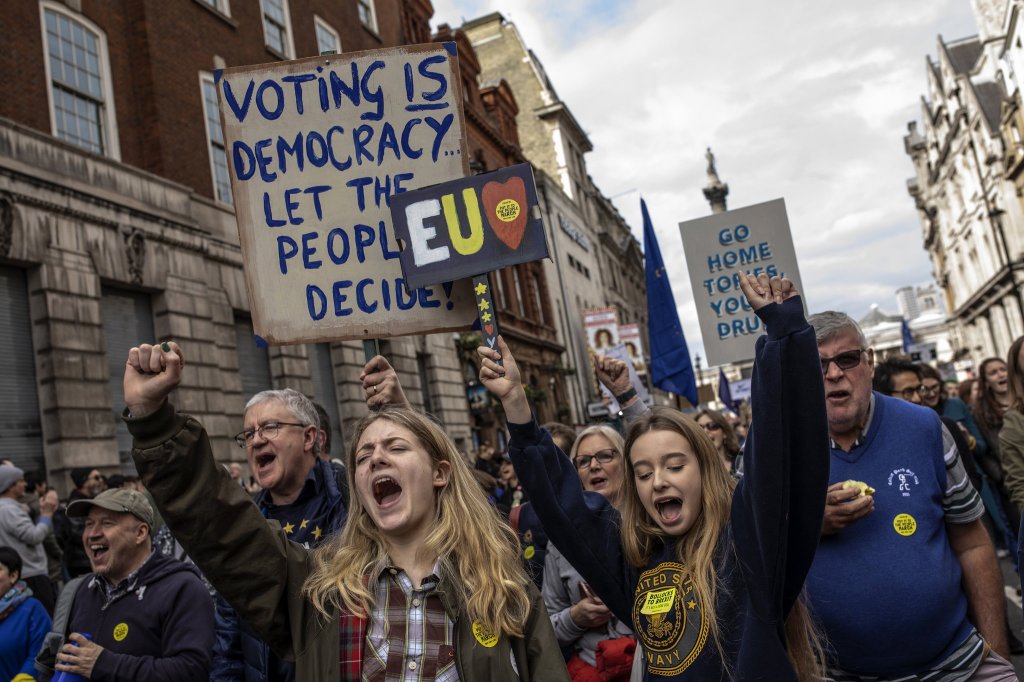
My quote from this piece in the New York Times, about the Conservative leadership contest and dissatisfaction with politics.
Most galling for many is that the decision lies with the Tories, whose party members are determined to have Brexit delivered by Oct. 31 at any cost. That view has been rejected by the majority of the population but trumpeted by Boris Johnson, the front-runner in the prime minister’s race with a 48-point lead, according to a recent YouGov poll.
But despite the dissatisfaction, few people are calling for the prime minister to be elected directly.
“Members of Parliament electing a prime minister is a central part of parliamentary democracy, so even if the system could be changed it would fundamentally undermine the principle of parliamentary confidence,” said Owen Winter, the director of Make Votes Matter, a political group that campaigns for proportional representation.
The current leadership contest, however, has resulted in greater awareness of how unrepresentative the House of Commons is. The share of seats each party gets does not match the share of votes it receives, which has resulted in more people — including Conservative Party members — calling for an overhaul of the “first past the post” voting system. Critics say it favors larger political parties, which have a larger geographical base.
The Conservative Party lost its parliamentary majority in the 2017 general election, but struck a deal with Northern Ireland’s Democratic Unionist Party to support Mrs. May on certain issues in exchange for financial support.
“The new prime minister will have a majority in the House of Commons despite the Conservatives and D.U.P. winning only 43 percent of the vote in 2017,” Mr. Winter said. “If Parliament genuinely represented how people voted, the issue of an internal leadership election would be far less problematic, because the new leader would still have to win the support of M.P.s from multiple parties, representing a majority of voters.”
 Owen Winter
Leave a comment